
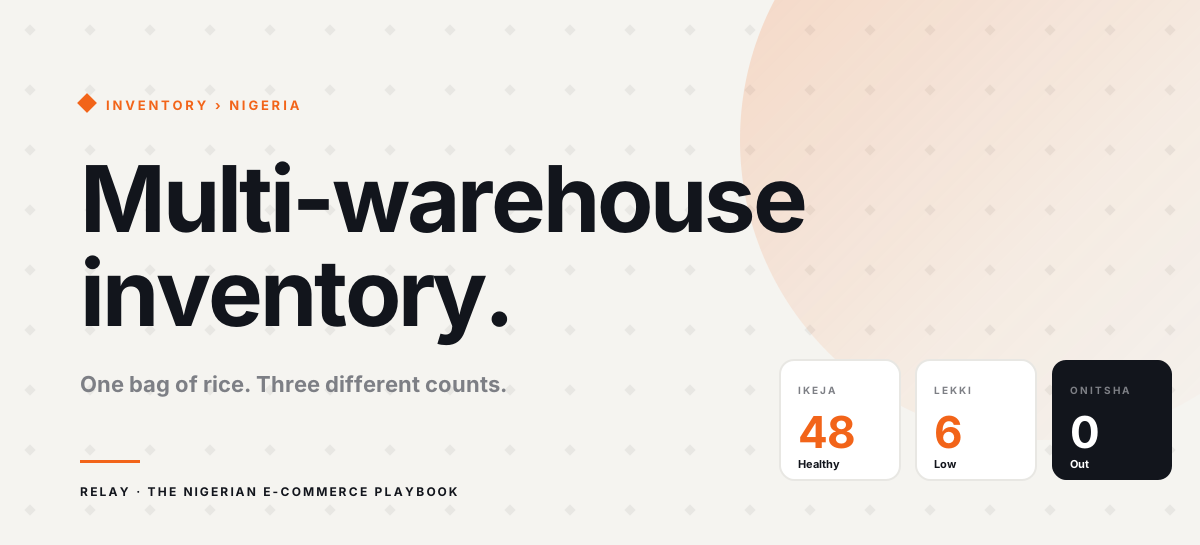
Multi-Warehouse Inventory Management for Nigerian E-commerce Merchants
Relay
If you run an e-commerce business in Nigeria and keep stock in more than one place, quiet inventory errors are probably costing you money.
Maybe you have products in a shop in Lagos, extra stock in Onitsha, and fast-movers in Asaba. At first, it feels manageable. But once sales start happening from several locations at the same time, the count falls out of line fast. One warehouse updates at the end of the day. Another sells offline without logging it. Someone forgets to mark the sheet before going home. Before lunchtime the next day, a customer has paid for a product that isn't sitting on any shelf — and no one in the business knows yet.
This is one of the most common inventory problems Nigerian e-commerce merchants run into as they grow.
Most of the time, it is not a management problem. It is a system problem. A single spreadsheet works fine for one person and one location. It stops working the moment stock is spread across multiple shops, fulfillment centres, or storage points. By then, the number on the sheet is no longer the same as the number on the shelf. That gap is where overselling starts — along with refunds, cancelled orders, frustrated WhatsApp messages from customers, and the slow erosion of trust a growing brand cannot really afford.
A better approach is proper multi-warehouse inventory management. The idea is straightforward: track stock separately for each location instead of rolling everything into one total. So instead of saying you have 120 units of a product, the system shows what is actually on the ground in each place — 48 in Ikeja, 6 in Lekki, 0 in Onitsha. That level of real-time stock visibility matters because orders are fulfilled from actual warehouses, not from a comforting-looking sum.
It matters even more the moment a fulfillment centre is in the picture. If the merchant's dashboard says one thing and the fulfillment team sees another, someone ends up accepting an order that cannot be shipped. When both sides read from the same live count, there are fewer disputes, fewer missed deliveries, and no awkward calls explaining why a package is not coming today.
A reliable inventory tool should do four basic things well: track stock per warehouse, warn you before an item runs out, log every restock and adjustment with a timestamp, and reduce stock automatically the moment an order is placed. If those four basics are not covered, most Nigerian merchants eventually drift back to manual updates — and the drift starts all over again.
This matters for small businesses too, not just large retailers and marketplaces. Even if your operation is one-warehouse today, the right setup makes the second warehouse painless tomorrow. The moment you take on a partner store, an outside fulfillment centre, or a second outlet in another state, weak stock visibility turns into a daily operational problem. Solving it halfway through Detty December is nobody's idea of a good time.
For Nigerian e-commerce merchants in 2026, multi-location stock management is no longer something to think about later. It is one of the simplest, most profitable changes a growing business can make — a quiet way to reduce overselling, tighten fulfillment, and protect customer trust while the rest of the operation scales.
If your inventory still depends on somebody remembering to update a sheet at close of business, that is probably the first thing to fix.